
Bradenton Whistleblower Attorney
Florida Attorneys
Serving You and The State of Florida
Lopez Law Group represents employees experiencing retaliation after reporting illegal activity, safety violations, fraud, or unethical conduct in Bradenton and throughout Manatee County. We handle whistleblower retaliation claims under Florida’s Whistleblower Act for private-sector employees, the Florida Public Whistle-blower’s Act for government workers, and False Claims Act qui tam cases when employers defraud federal programs.
Our Bradenton whistleblower attorneys document retaliation, file timely administrative complaints and civil lawsuits, pursue reinstatement and damages, and protect employees who expose wrongdoing from employer punishment.
Contact us today to discuss your whistleblower retaliation claim. Consultations for employment law matters are paid.
Bradenton Whistleblower Attorney Guide
- Why Choose Lopez Law Group for Whistleblower Claims in Bradenton
- What Is Whistleblower Protection Under Florida Law?
- What Counts as Retaliation Under Florida Whistleblower Laws?
- What Should I Do If I’m Considering Reporting Violations or Have Already Been Retaliated Against?
- FAQ for Bradenton Whistleblower Attorneys
Why Choose Lopez Law Group for Whistleblower Claims in Bradenton

Lopez Law Group brings decades of combined experience handling whistleblower retaliation claims in Manatee County and throughout Florida. We understand Florida’s whistleblower protection statutes, the procedural requirements that precede litigation, the documentation needed to prove retaliation claims, and the defenses employers use to justify adverse actions after employees report misconduct.
Our whistleblower representation includes:
- Case evaluation analyzing whether reported conduct qualifies as protected whistleblowing, identifying proper reporting procedures, and determining whether retaliation timing and evidence support viable claims
- Strategic guidance on reporting, advising when to report internally versus directly to government agencies, which agencies have jurisdiction over specific violations, and how to document violations and retaliation before filing complaints
- Administrative complaint filing, preparing detailed FCHR complaints for public employees, ensuring compliance with 60-day reporting requirements for private-sector whistleblowers, and coordinating with government agency investigations
- Retaliation documentation preserving evidence of adverse actions, including termination, demotion, pay reduction, schedule changes, negative performance reviews, and hostile treatment that followed protected disclosures
- Civil litigation filing whistleblower retaliation lawsuits in Florida circuit court, presenting evidence of protected disclosures and retaliatory adverse actions, and pursuing remedies including reinstatement, back pay, compensatory damages, and attorney fees
- False Claims Act qui tam representation filing sealed qui tam complaints under the False Claims Act when employers defraud federal healthcare programs or government contracts, pursuing whistleblower rewards, and protecting whistleblowers from retaliation
- Employer counseling guiding Bradenton employers through whistleblower complaint investigations, corrective action procedures, and compliance measures that prevent retaliation claims
Consultations for employment law matters are paid. Call (727) 933-0015 now to speak with a trusted whistleblower attorney in Florida.
What Is Whistleblower Protection Under Florida Law?

Florida law protects employees who report violations of law, refuse to participate in illegal activities, or disclose information about employer misconduct to appropriate authorities. Whistleblower protections vary depending on whether employees work in the private sector or for government agencies.
Florida Private-Sector Whistleblower Act
Florida Statute § 448.102 prohibits private-sector employers from retaliating against employees who disclose or threaten to disclose employer violations of law to government agencies.
The statute protects employees who:
- Report violations of law to government agencies having authority to investigate, correct, or prosecute violations
- Object to or refuse to participate in employer activities, policies, or practices that violate laws, rules, or regulations
- Provide information to or testify before government agencies investigating employer violations
Protected disclosures must involve violations of law, not just company policy violations, unethical conduct, or poor business practices. Violations of federal, state, or local statutes, regulations, or ordinances qualify as protected disclosures.
Critical Procedural Requirement: Florida’s private-sector whistleblower statute requires employees to disclose violations to government agencies with authority over the violations within 60 days of experiencing retaliation. Simply reporting violations internally to management or HR doesn’t satisfy this requirement unless internal reporting is required by law or the employee objects to participating in illegal activities.
Remedies for private-sector whistleblower retaliation include:
- Reinstatement to former positions
- Back pay for lost wages
- Compensatory damages for emotional distress and reputational harm
- Attorney fees and costs
- Injunctive relief prohibiting further retaliation
Florida Public Whistleblower’s Act
Florida Statute § 112.3187 protects public employees who report violations of law, gross mismanagement, gross waste of public funds, injury to public health or safety, or abuse of authority to appropriate authorities. Public employees include state, county, and municipal government workers.
Protected disclosures under the Public Whistle-blower’s Act include reporting:
- Violations of federal, state, or local laws, rules, or regulations
- Gross mismanagement of government resources
- Gross waste of public funds
- Actions creating substantial and specific danger to public health or safety
- Abuse of authority by public officials
Public employees must disclose information to:
- Supervisors or agency heads
- Inspector General offices
- Florida Commission on Human Relations
- Other appropriate government entities
Filing requirements: Public employees must file written complaints with the Florida Commission on Human Relations (FCHR) or the Office of the Inspector General within 60 days of experiencing retaliation. FCHR investigates complaints and issues determinations, after which employees may pursue civil litigation.
Remedies for public-sector whistleblower retaliation include reinstatement, back pay, compensatory damages up to $100,000, and attorney fees.
False Claims Act Whistleblower Protection
The federal False Claims Act (31 U.S.C. § 3730) protects whistleblowers who report fraud against federal programs, including Medicare fraud, Medicaid fraud, defense contract fraud, and other schemes defrauding the government. False Claims Act whistleblowers file qui tam lawsuits on behalf of the government, and the government may intervene and prosecute cases or decline intervention and allow whistleblowers to pursue cases independently.
The False Claims Act also prohibits retaliation against employees who investigate, file qui tam complaints, or assist in False Claims Act investigations. Retaliation remedies include reinstatement, double back pay, compensatory damages, and attorney fees.
Common False Claims Act violations include:
- Billing Medicare or Medicaid for services not provided
- Upcoding medical procedures to receive higher reimbursements
- Submitting false claims to government healthcare programs
- Kickbacks for patient referrals violating the Anti-Kickback Statute
- Defense contractors submitting false invoices or providing defective products
- Government contractors falsifying contract compliance certifications
Whistleblowers who file qui tam cases receive monetary rewards (a percentage of the amount recovered by the government), with higher percentages when the government declines intervention and whistleblowers pursue cases independently.
What Counts as Retaliation Under Florida Whistleblower Laws?
Retaliation occurs when employers take adverse employment actions against employees because they engaged in protected whistleblowing activities. Adverse actions include any employment decisions that harm employees or deter others from reporting violations.
Common retaliatory actions include:
- Termination: Firing employees shortly after they report violations or refuse to participate in illegal activities
- Demotion: Reducing job titles, responsibilities, or authority after protected disclosures
- Pay reduction: Cutting salaries, commissions, bonuses, or overtime opportunities
- Unfavorable transfers or reassignments: Moving employees to less desirable locations, shifts, or positions
- Negative performance reviews: Documenting false or exaggerated performance problems after employees report misconduct
- Discipline: Issuing written warnings, suspensions, or probation for conduct previously tolerated
- Hostile treatment: Creating hostile work environments through harassment, exclusion, or increased scrutiny
- Denial of promotions or raises: Passing over employees for advancement after whistleblowing
- Schedule manipulation: Reducing hours, assigning undesirable shifts, or eliminating flexibility
- Constructive discharge: Making working conditions so intolerable that employees feel forced to resign
Proving retaliation requires showing:
- You engaged in protected whistleblowing activity (reporting violations, refusing illegal conduct, or assisting investigations)
- Your employer took adverse employment action
- A causal connection exists between protected activity and adverse action
Timing often establishes a causal connection. Adverse actions occurring days or weeks after protected disclosures suggest a retaliatory motive, particularly when combined with suspicious circumstances like sudden performance complaints, false accusations, or departures from normal disciplinary procedures.
What Should I Do If I’m Considering Reporting Violations or Have Already Been Retaliated Against?
Whistleblower cases require strategic planning, careful documentation, and compliance with procedural requirements that vary based on employment sector and violation type. Taking the right steps protects your legal rights and strengthens your position.
Document Violations and Retaliation
Before reporting violations, create detailed records including:
- Specific examples of illegal conduct, including dates, amounts, and people involved
- Documents supporting violation claims, such as false invoices, altered records, or communications directing illegal activities
- Witnesses who can corroborate violations or retaliation
- Timeline showing when you discovered violations, when you reported them, and when retaliation began
- Evidence of adverse actions, including termination notices, disciplinary records, performance reviews, pay stubs showing reductions, or emails documenting hostile treatment
Save evidence on personal devices and personal email accounts. Employers often restrict access to company systems after employees report misconduct or experience retaliation.
Determine the Proper Reporting Channel
Where and how you report violations affects your legal protections.
Private-sector employees must report violations to government agencies with the authority to investigate or prosecute violations. The appropriate agencies depend on the type of violation, and may include:
- Department of Labor for wage and hour violations
- OSHA for workplace safety violations
- SEC for securities fraud
- IRS for tax fraud
- State licensing boards for professional misconduct
- Law enforcement for criminal violations
Public employees should report violations to supervisors, agency heads, Inspector General offices, or directly to FCHR, depending on violation severity and retaliation concerns.
Healthcare fraud whistleblowers should consult attorneys before reporting to evaluate whether False Claims Act qui tam filings are appropriate. Qui tam cases require sealed filings with specific procedural requirements that protect whistleblower anonymity during government investigations.
Consult a Whistleblower Attorney Before Reporting
Whistleblower attorneys help you:
- Evaluate whether reported conduct qualifies as protected whistleblowing under applicable statutes
- Determine proper reporting channels and government agencies with jurisdiction
- Preserve evidence before reporting triggers employer countermeasures
- Navigate timing requirements, including the 60-day window for private-sector whistleblowers
- Protect against retaliation by documenting conduct and preparing for potential adverse actions
- Determine remedies, including potential qui tam rewards when applicable
Many employees report violations without understanding procedural requirements, only to discover later that reporting internally to HR or management doesn’t satisfy statutory requirements and they’ve forfeited whistleblower protections.
Act Within Deadlines
Florida’s private-sector Whistleblower Act requires reporting violations to government agencies within 60 days before or after experiencing retaliation. Missing this deadline may forfeit statutory protections.
Public employees must file FCHR complaints within 60 days of retaliation.
False Claims Act qui tam cases have no specific filing deadline, but claims are barred when violations become public through other sources, and unreasonable delays may affect recovery amounts.
FAQ for Bradenton Whistleblower Attorneys
Do I Have to Report Internally Before Going to an Agency in Florida?
Not for private-sector whistleblowers unless internal reporting is required by law. Florida law protects employees who report directly to government agencies without first reporting to management or HR. However, employees who refuse to participate in illegal activities may establish protected conduct without agency reporting.
Can I Be Protected If I Refused to Do Something Illegal at Work?
Yes. Florida’s private-sector whistleblower law protects employees who refuse to participate in illegal activities, policies, or practices, even without reporting violations to government agencies. However, the refused activity must violate actual laws, not just company policies or ethical standards.
What’s the Difference Between a Whistleblower Case and a False Claims Act Qui Tam Case?
Whistleblower retaliation cases seek remedies for employees punished for reporting violations. False Claims Act qui tam cases seek recovery of government funds lost to fraud, with whistleblowers receiving a percentage of amounts recovered. Qui tam cases also include anti-retaliation protections for whistleblowers who file complaints or assist investigations.
Can I Get a Whistleblower Reward for Reporting Fraud?
Possibly, if the fraud involves federal programs. The False Claims Act provides whistleblowers with a percentage of the amount the government recovers from fraudsters. Rewards apply to Medicare fraud, Medicaid fraud, defense contract fraud, and other schemes defrauding federal programs. Florida’s private-sector and public-sector whistleblower laws don’t provide monetary rewards.
What If My Employer Says I Violated Confidentiality by Reporting Violations?
Employers cannot use confidentiality agreements, non-disclosure agreements, or trade secret claims to silence whistleblowers who report violations of law to government agencies or refuse to participate in illegal conduct. Florida and federal whistleblower laws prohibit retaliation for protected disclosures regardless of confidentiality provisions in employment agreements.
Retaliation Doesn’t Wait, Neither Should You
Employers can retaliate fast after employees report violations — sudden terminations, manufactured performance problems, or demotions appear within days or weeks of protected disclosures. Florida’s 60-day reporting requirements for whistleblowers mean delays forfeit legal protections regardless of retaliation severity. Strategic documentation, timely agency disclosures, and legal representation protect your rights before retaliation escalates.
Contact Lopez Law Group’s Bradenton whistleblower lawyer to discuss your retaliation claim. Consultations for employment law matters are paid. We’ll explain current rates, evaluate your case, and outline next steps when you call.
Lopez Law Group — Bradenton Office
1215 Manatee Ave W #109
Bradenton, FL 34205
📞 (941) 401-1351
✉️ info@thelopezlawgroup.com
Business Hours
Monday – Friday
Practice Areas
- Business Lawyers
- Residential Real Estate Lawyers
- Commercial Real Estate Lawyers
- DUI Lawyers in Florida
- Expunction and Sealing Lawyers
- Florida Clemency
- Injunction Lawyers
- Tenant Lawyers
- Landlord Lawyers
- HOA Lawyers
- Defamation Lawyers
- Eviction Attorneys
- Moving Company Dispute Lawyers
- Probate Lawyers in Florida
What Our Clients Say

A Godsend
Mr. Lopez was a Godsend and really helped me with my situation. Him and the entire firm were very diligent and helped speed the early stages of the process along due to a pressing situation. Throughout my experience working with the firm, they were always responsive and available any time I had a question or wanted to check on the state of affairs. Hopefully I won’t have to recommend Lopez Law Group to my friends or family, but if those unfortunate circumstances arise then there’s only one name I would trust. Thank you again for all your help!
Lopez Law Group Can See You Through Cases Like:




Don't See What You Need?
AS SEEN ON:





Lopez Law Group
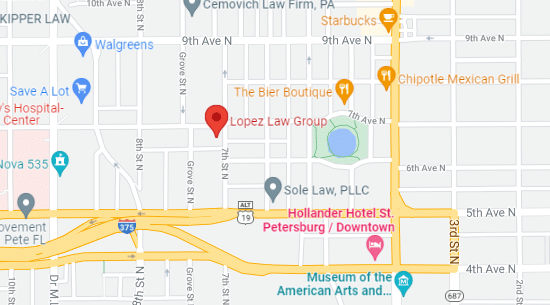
700 7th Ave N, Suite A,
St. Petersburg, FL 33701
P: 727-933-0015
Business Hours
Mo, Tu, We, Th, Fr
Schedule a Call Back
Book a Consultation