Bradenton Probate Attorney
Florida Attorneys
Serving You and The State of Florida
Many people contact a Bradenton probate attorney because the questions come faster than the answers. What happens to the house? Who handles the debts? Does the will need to go through the probate court?
Lopez Law Group can help answer those questions and move your loved one’s estate forward, offering empathetic and timely support to families and personal representatives.
Probate in Florida is procedurally specific. Mistakes made early in the process can create delays and complications that cost more to fix than to prevent. Whether the estate is straightforward or complicated by real estate, creditor claims, or family disagreement, the process goes more smoothly when it is handled correctly from the start. Call (727) 933-0015 to discuss your situation and current rates. Consultations for probate matters are paid.
Table of Contents
- Why Choose Lopez Law Group Probate Lawyers in Bradenton
- Probate Terms Bradenton Families Should Know
- Formal Administration vs. Summary Administration in Florida
- What Happens If Someone Dies Without a Will in Florida?
- What Does the Personal Representative Do in a Bradenton Probate Case?
- How Florida Probate Handles Outstanding Debts and Creditor Claims
- Can Probate Be Avoided in Florida?
- Will Contests and Probate Litigation in Bradenton
- FAQ for Bradenton Probate Attorney
Why Choose Lopez Law Group Probate Lawyers in Bradenton

Probate in Manatee County has its own filing requirements, notice deadlines, and procedural rhythms. Getting it right requires more than knowing Florida’s probate statutes. It requires knowing how the process actually moves through the circuit court system and what happens when something goes sideways.
Lopez Law Group’s probate attorneys bring both.
Every estate is different, and so is every family navigating one. Our Bradenton probate lawyers can assist with:
- Formal administration for estates requiring full court supervision
- Summary administration for qualifying smaller estates
- Ancillary probate for out-of-state decedents with Florida property
- Personal representative appointment and estate administration
- Creditor claim review and management
- Probate real estate sales and property transfers
- Will contests and probate litigation
- Intestate estates where no valid will exists
- Trust administration and coordination with probate proceedings
If you have estate or probate questions, don’t hesitate to contact us for answers. We are here to assist Bradenton families like yours.
Probate Terms Bradenton Families Should Know
Probate is the court-supervised legal process through which a deceased person’s assets are identified, debts are resolved, and property is transferred to the people entitled to inherit it. In Florida, that process is governed by the Florida Probate Code, which establishes the procedures, deadlines, and requirements that apply to every estate moving through the Manatee County circuit court.
The process comes with its own vocabulary, and unfamiliarity with the terminology is one of the things that makes probate feel more complicated than it needs to be. Here are some terms that come up most often in Florida estate administration:
The People
Decedent — the person who died and whose estate is being administered
Personal representative — Florida’s term for what other states call an executor. The personal representative is appointed by the court and is legally responsible for administering the estate, paying debts, and distributing assets to beneficiaries
Beneficiary — someone who inherits assets under the terms of a will
Heir — someone who inherits under Florida’s intestate succession laws when no valid will exists. Heirs and beneficiaries are not always the same people
The Documents
Will — the legal document directing how a decedent’s assets are distributed. Florida has specific execution requirements for a will to be valid
Codicil — a formal amendment to an existing will
Letters of administration — the court-issued document that authorizes the personal representative to act on behalf of the estate, open accounts, access assets, and conduct estate business
The Process
Formal administration — the standard Florida probate process, required for most estates. Involves court supervision from opening to final distribution
Summary administration — a simplified probate process available for qualifying smaller estates or when the decedent passed more than two years prior
Ancillary probate — a separate Florida court proceeding that may be needed when an out-of-state decedent owned Florida real estate in their name alone, and there isn’t another valid way for that property to transfer without probate
Intestate succession — the order in which Florida law distributes a decedent’s assets when no valid will exists, governed by Florida Statutes Chapter 732
The Assets
Probate assets — assets titled solely in the decedent’s name that must pass through the court process before transferring to heirs or beneficiaries
Non-probate assets — assets that transfer automatically outside of court, including jointly held property, accounts with named beneficiaries, and assets held in a trust
Homestead — Florida’s constitutional protection for a primary residence. Homestead rules affect how the property passes at death and who may inherit it, and they interact with probate in ways that frequently surprise families
Lady Bird deed — a Florida deed that allows real property to transfer at death without going through probate, while the owner retains full control during their lifetime
Formal Administration vs. Summary Administration in Florida
Florida offers two primary probate processes, and the difference between them affects cost, timeline, and court involvement significantly.
Formal Administration
Formal administration is the standard probate process. It requires appointing a personal representative through the court, notifying creditors, filing an inventory of estate assets, resolving debts and claims, and petitioning for final distribution.
It is required when the estate does not qualify for summary administration, and the right process depends on factors like the value and type of probate assets and how long ago the person passed away.
Summary Administration
Summary administration is a simplified process available when the value of assets subject to probate does not exceed the threshold set under Florida Statutes § 735.201, or when the decedent passed more than two years prior. It does not require appointing a personal representative and generally resolves faster than formal administration.
Not every estate that appears to qualify actually does. Determining eligibility requires a careful review of how assets are titled and whether any creditor claims remain outstanding. An estate that looks simple on the surface sometimes becomes more complicated once the full picture of assets and liabilities is clear.
What Happens If Someone Dies Without a Will in Florida?
When someone passes without a valid will, Florida’s intestate succession laws determine who inherits, and distribution depends entirely on the family structure the decedent left behind.
| Family Situation | Who Inherits |
| Surviving spouse, no descendants | Spouse inherits everything |
| Surviving spouse and descendants who are also the spouse’s descendants | Spouse inherits everything |
| Surviving spouse and descendants from outside the marriage | Spouse receives half; descendants share the other half |
| No surviving spouse, but descendants survive | Descendants inherit everything equally |
| No spouse, no descendants | Parents inherit equally, or the surviving parent takes all |
| No spouse, no descendants, no parents | Siblings and their descendants inherit |
| No qualifying relatives | Estate passes to the state of Florida |
Dying without a will does not simplify the court process. An intestate estate still requires probate to transfer assets, appoint a personal representative, and resolve creditor claims.
It also shifts the question from what the decedent wanted to what Florida law requires, and those are not always the same thing. Blended families, estranged relatives, and long-term partners who were never married often find that Florida’s default rules produce results the decedent never intended.
What Does the Personal Representative Do in a Bradenton Probate Case?
Most people who end up serving are doing it for the first time, and it is often someone who agreed without fully understanding what the appointment required. The personal representative administers the estate on behalf of beneficiaries, creditors, and the court, and is held to a fiduciary standard that makes mistakes personally costly.
A personal representative is responsible for:
- Filing the petition to open probate
- Identifying and securing estate assets
- Notifying creditors and publishing the required notice
- Filing an inventory with the court
- Reviewing and responding to creditor claims
- Managing estate assets during administration
- Petitioning for final distribution to beneficiaries
Each of those obligations has deadlines, and missing them can create problems and, in some cases, expose the personal representative to personal liability, especially if it causes loss to the estate or beneficiaries. Legal counsel handles the procedural requirements, so the personal representative can focus on the decisions that actually require their judgment.
How Florida Probate Handles Outstanding Debts and Creditor Claims
One of the primary functions of the probate process is resolving outstanding debts before assets are distributed. Florida law requires the estate to publish a notice to creditors and notify known creditors directly. Creditors then have a limited window to file claims against the estate.
Not every creditor claim is valid, and not every valid claim must be paid in full. Personal representatives have the authority to review claims, object to improper claims, and negotiate resolutions where appropriate.
However, distributing estate assets before creditor claims are resolved exposes the personal representative to personal liability for unpaid amounts. This is one of the more common and avoidable mistakes in self-administered estates.
Estates with significant debt, contested creditor claims, or creditors who file late require careful management. Lopez Law Group’s probate lawyers offer experienced support with creditor claims.
Can Probate Be Avoided in Florida?
Some assets pass outside of probate entirely. The distinction comes down to how each asset was titled and whether a transfer mechanism was already in place at death.
Assets that typically avoid probate include:
- Property held in joint tenancy with right of survivorship
- Accounts with designated beneficiaries such as life insurance and retirement accounts
- Assets held in a revocable living trust
- Accounts designated as payable on death or transfer on death
- Real estate titled with a Lady Bird deed
Assets that lack these features generally require probate before they transfer to heirs, including:
- Real property titled solely in the decedent’s name
- Bank accounts without beneficiary designations
- Personal property with no automatic transfer mechanism
Manatee County real estate is one of the most common and significant probate assets, particularly when families discover after a death that a property was never retitled or placed in a trust.
Will Contests and Probate Litigation in Bradenton
Many probate proceedings close without formal disputes. When they do not, the disagreements range from questions about a will’s validity to conflicts about how the personal representative is managing the estate.
Grounds for Contesting a Will in Florida
A will contest challenges the validity of the document itself. Recognized grounds under Florida law include:
- Lack of testamentary capacity, meaning the decedent did not understand what they were signing or its consequences
- Undue influence by someone who manipulated the decedent’s decisions
- Fraud or forgery
- Failure to meet Florida’s execution requirements for a valid will
Will contests are litigated in probate court and require evidence beyond mere disagreement with how assets were distributed.
Personal Representative Disputes
Conflicts between beneficiaries and the personal representative are among the more common sources of probate litigation. Allegations that the personal representative is mismanaging assets, failing to communicate with beneficiaries, or making distributions that do not match the will’s terms are all grounds for court intervention.
Beneficiaries have legal rights during the administration process, and personal representatives have legal obligations. When those lines are crossed, the probate court is the appropriate venue to resolve it.
FAQ for Bradenton Probate Attorney
How Long Does Probate Take in Florida?
Timeline depends on the type of administration and the complexity of the estate. Summary administration resolves faster than formal administration. Estates with real property, business interests, or contested claims take more time than those with straightforward liquid assets.
How Much Does Probate Cost in Florida?
Florida law governs attorney fees in probate proceedings, and fees are generally based on the value of the estate. Additional costs include court filing fees, publication costs for creditor notices, and expenses related to asset management or real estate transactions during administration. Call (727) 933-0015 for current rates and to discuss what your situation involves.
What Is Ancillary Probate, and Do I Need It for Florida Property?
If someone lived outside Florida but owned real property in Manatee County, that property requires a separate Florida probate proceeding called ancillary probate before it can be transferred or sold, even if the primary estate was already probated in another state. Lopez Law Group handles these matters for out-of-state families who need Florida counsel to manage the process without having to be here in person.
Can I Sell a House During Probate in Florida?
Yes. In a formal administration, the personal representative can often sell probate real estate, but whether court approval is needed depends on the will, the type of administration, and any court orders. The proceeds stay in the estate and are subject to creditor claims and distribution.
What Is the Difference Between Probate and Trust Administration?
Probate is a court-supervised process for assets titled in the decedent’s name alone. Trust administration is a private process for assets held in a revocable living trust, which generally avoids probate court entirely. Many estates involve both, with some assets passing through probate and others transferring through trust administration simultaneously.
What If Family Members Disagree About the Estate?
Disputes among beneficiaries, or between beneficiaries and the personal representative, may require court intervention. Common conflicts include allegations of asset mismanagement, valuation disputes, and challenges to the validity of the will or trust. These matters are resolved through the probate court, and legal representation protects your position throughout that process.
Contact a Bradenton Probate Lawyer at Lopez Law Group
Many people contact a probate attorney because they have reached the end of what they can figure out on their own. The forms are unfamiliar, the deadlines are unclear, and the stakes feel higher than they should for what looks like paperwork.
Lopez Law Group’s probate attorneys handle the procedural requirements, communicate what is happening and why, and keep the process moving so the people responsible for the estate are not carrying it alone. Reach the Bradenton office or contact us online to discuss your situation, current rates, and what comes next. Consultations are paid.
Lopez Law Group
1215 Manatee Ave W #109
Bradenton, FL 34205
Phone: (941) 401-1351
Email: [email protected]
Hours: Monday – Friday: 9:00 AM – 5:00 PM
Practice Areas
- Business Lawyers
- Residential Real Estate Lawyers
- Commercial Real Estate Lawyers
- DUI Lawyers in Florida
- Expunction and Sealing Lawyers
- Florida Clemency
- Injunction Lawyers
- Tenant Lawyers
- Landlord Lawyers
- HOA Lawyers
- Defamation Lawyers
- Eviction Attorneys
- Moving Company Dispute Lawyers
- Probate Lawyers in Florida
What Our Clients Say

A Godsend
Mr. Lopez was a Godsend and really helped me with my situation. Him and the entire firm were very diligent and helped speed the early stages of the process along due to a pressing situation. Throughout my experience working with the firm, they were always responsive and available any time I had a question or wanted to check on the state of affairs. Hopefully I won’t have to recommend Lopez Law Group to my friends or family, but if those unfortunate circumstances arise then there’s only one name I would trust. Thank you again for all your help!
Lopez Law Group Can See You Through Cases Like:




Don't See What You Need?
AS SEEN ON:





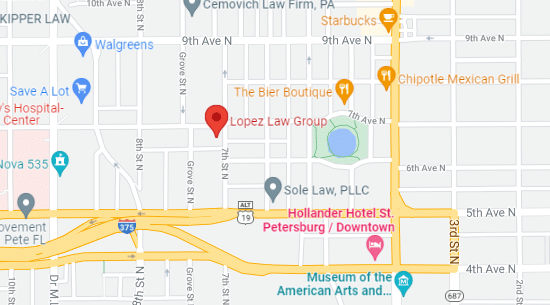
Lopez Law Group
700 7th Ave N, Suite A,
St. Petersburg, FL 33701
P: 727-933-0015
Business Hours
Mo, Tu, We, Th, Fr
Schedule a Call Back
Book a Consultation