
Permanent Restraining Order Lawyer in St. Petersburg, FL
Florida Attorneys
Serving You and The State of Florida
If you need a permanent restraining order lawyer in St. Petersburg, you are likely facing a dangerous situation that requires immediate legal intervention. Someone in your life poses an ongoing threat to your safety. They ignore your boundaries, show up where you live or work, send threatening messages, or use intimidation to control you.
You need more than warnings or promises to stop. You need a court order that law enforcement can enforce when violations occur.
Lopez Law Group helps survivors obtain permanent injunctions for protection in St. Petersburg and across Pinellas County. Our attorneys guide clients through domestic violence, dating violence, stalking, repeat violence, and sexual violence injunction proceedings in Florida courts. We prepare evidence, represent you at hearings, and pursue final orders that protect you, your children, and your home.
Call (727) 933-0015 to discuss your case and explore your legal options. Consultation fees apply for civil injunction matters.
Table of Contents
- Key Takeaways for Permanent Restraining Orders in St. Petersburg
- Why Choose a Lopez Law Group Restraining Order Attorney
- Florida’s Injunction for Protection Laws
- How to Get a Permanent Restraining Order in St. Petersburg
- Protections Available Through Florida Injunctions
- What If the Injunction Is Violated?
- Do I Need a Lawyer to File an Injunction in Pinellas County?
- FAQ for Permanent Restraining Orders in St. Petersburg
- Facing Domestic Violence or Stalking? Contact Lopez Law Group Now
Key Takeaways for Permanent Restraining Orders in St. Petersburg
- What many people call a permanent restraining order is legally termed a final injunction for protection in Florida, issued under Florida Statutes § 741.30 and related provisions covering domestic, dating, sexual, repeat, and stalking violence
- When immediate danger exists, Pinellas County courts issue temporary ex parte injunctions that provide protection until final hearings occur
- Unlike temporary orders that expire after hearings, final injunctions have no automatic end date and continue protecting petitioners unless courts later modify or vacate them through formal proceeding
- Florida injunction orders may grant exclusive use of shared residences, establish temporary parenting arrangements, and require respondents to surrender firearms to law enforcement within 24 hours of service
- When respondents contact petitioners, come near protected locations, or otherwise violate injunction terms, they face first-degree misdemeanor charges carrying up to one year in jail, regardless of the underlying conduct that led to the original injunction
Why Choose a Lopez Law Group Restraining Order Attorney
 Obtaining permanent injunctions requires presenting clear evidence of violence, threats, or harassment that convinces judges to issue long-term protection orders. Lopez Law Group represents survivors seeking injunctions in Pinellas County Circuit Court, where we handle the legal process while you focus on safety and stability.
Pinellas County Court Experience
We represent clients in the Sixth Judicial Circuit courts serving Pinellas County, appearing regularly at the St. Petersburg courthouse, where injunction hearings are held. Our attorneys understand how Pinellas County judges evaluate evidence in different injunction types, what documentation strengthens petitions, and how to present testimony that demonstrates the need for protection.
Trauma-Informed Representation
Injunction proceedings require survivors to recount frightening experiences and confront abusers in court settings. We prepare clients for what to expect at hearings, gather evidence that tells your story without requiring you to relive every detail, and work with court staff to arrange accommodations when face-to-face confrontation with respondents would cause additional trauma.
Comprehensive Protection Strategy
Effective injunctions address immediate safety concerns and longer-term stability needs. Our injunction lawyers in St. Petersburg pursue provisions that protect your children through temporary custody arrangements, secure exclusive use of your home so you don’t face displacement, and ensure firearm surrender requirements when weapons create additional danger.
Our approach considers how injunctions interact with pending criminal cases, family law proceedings, and immigration matters that affect your legal status.
Call (727) 933-0015 to schedule a meeting and discuss the protection you need. Consultation fees apply for civil injunction matters.
Florida’s Injunction for Protection Laws
Florida law provides five types of injunctions for protection, each addressing specific categories of violence or harassment. Which injunction applies to your situation determines where you file, what evidence you need, and what protections courts can order.
Domestic Violence Injunctions
Family or household members include:
- Current or former spouses
- Persons related by blood or marriage
- Persons currently residing together as a family or who previously resided together as a family
- Persons who have a child in common regardless of whether they married or lived together
Domestic violence injunctions provide the broadest protections and most frequently include provisions addressing custody, the marital home, and financial support obligations.
Dating Violence Injunctions
Florida Statutes § 784.046 addresses violence between individuals who have or had a continuing romantic or intimate relationship. Dating violence covers the same violent acts as domestic violence injunctions, but applies to dating partners rather than family members.
Courts consider relationship length, frequency of interaction, and time since the relationship ended when determining whether dating violence injunctions apply.
Repeat Violence Injunctions
Repeat violence injunctions protect victims who have been subjected to two incidents of violence or stalking, with at least one incident occurring within six months of filing the petition.
These injunctions apply when domestic or dating violence injunctions do not fit because no family or romantic relationship exists between the parties.
Sexual Violence Injunctions
Sexual violence injunctions protect victims of sexual battery, lewd or lascivious acts, luring or enticing a child, sexual performance by a child, or any other forcible felony involving sexual activity. Only one incident of sexual violence is required, and no specific relationship between parties needs to exist.
Stalking and Cyberstalking Injunctions
Florida Statutes § 784.0485 provides injunctions for victims of stalking: willful, malicious, and repeated following, harassing, or cyberstalking that causes substantial emotional distress. Cyberstalking includes electronic communication that causes substantial emotional distress and serves no legitimate purpose.
These injunctions address obsessive behavior patterns that create fear without necessarily involving physical violence.
How to Get a Permanent Restraining Order in St. Petersburg
The process of obtaining final injunctions in Pinellas County involves multiple steps from initial filing through final hearings.
Filing the Petition
Petitions must describe specific incidents of violence, threats, or stalking with dates, locations, and detailed accounts of what occurred. General allegations without supporting facts rarely result in temporary or final injunctions. Include information about:
- Specific acts of violence or threats, including dates and what was said or done
- Injuries sustained with medical treatment received
- Police reports filed related to incidents
- Witnesses who observed violence, threats, or harassment
- Prior protective orders or criminal cases involving the respondent
- Weapons the respondent owns or has access to
- Children in common and current custody arrangements
Petitions for injunctions are filed at the Pinellas County Clerk of Court at the St. Petersburg courthouse located at 545 First Avenue North.
Obtaining Temporary Injunctions
When immediate danger exists, judges review petitions the same day they are filed and issue temporary ex parte injunctions without the respondent being present. Temporary injunctions take effect immediately upon issuance and remain in place until final hearings are held.
Temporary orders typically include:
- No-contact provisions prohibiting all communication
- Stay-away orders requiring respondents to remain certain distances from petitioners, their homes, workplaces, schools, and other locations
- Temporary exclusive use of shared residences
- Temporary custody arrangements for minor children
- Firearm surrender requirements
Law enforcement serves temporary injunctions on respondents along with notice of the final hearing date. Service must be completed before final hearings can proceed.
Preparing for Final Hearings
Final hearings typically occur within 15 days of temporary injunction issuance. Both parties appear before judges who hear testimony and review evidence before deciding whether to issue final injunctions.
Evidence that strengthens your case includes:
- Text messages, emails, voicemails, and social media communications showing threats, harassment, or obsessive contact
- Photographs of injuries or property damage
- Medical records documenting treatment for injuries
- Police reports and witness statements
- Documentation of prior incidents, including dates and descriptions
- Ring camera footage, security video, or other recordings
- Witness testimony from people who observed violence or threatening behavior
Your attorney helps organize evidence, prepares you to testify clearly about what occurred, and questions respondents to expose inconsistencies in their testimony. Effective hearing preparation significantly increases the likelihood of obtaining final injunctions with comprehensive protective provisions.
What Happens at Final Injunction Hearings
Final hearings operate like mini-trials where both sides present evidence and testimony. Petitioners testify first, describing incidents that led to seeking injunctions. Respondents may testify and present their own evidence. Judges ask questions and evaluate credibility before ruling.
Petitioners must prove by a preponderance of the evidence (more likely than not) that domestic violence, dating violence, stalking, or other qualifying conduct occurred.
 At the end of this hearing, judges may:
- Grant final injunctions with provisions tailored to your situation
- Deny petitions if evidence is insufficient
- Continue hearings to allow additional time for evidence gathering or service completion
Protections Available Through Florida Injunctions
Final injunctions for protection can include various provisions designed to keep petitioners safe and maintain stability.
No-Contact and Stay-Away Provisions
All injunctions prohibit respondents from contacting petitioners directly or indirectly through third parties. Stay-away provisions require respondents to remain specified distances from petitioners’ homes, workplaces, schools, vehicles, and other locations petitioners regularly frequent.
Exclusive Use of Shared Residence
When petitioners and respondents share housing, injunctions can award exclusive use to petitioners and order respondents to vacate immediately. This provision prevents the displacement of survivors and their children while allowing respondents time to arrange alternative housing.
Temporary Custody and Parenting Time
Injunctions addressing domestic or dating violence may establish temporary custody arrangements and parenting time schedules when parties have children in common. Courts prioritize child safety when parents have histories of violence, often ordering supervised visitation or suspending contact entirely until respondents complete batterer’s intervention programs.
Firearm Surrender Requirements
Florida law requires respondents to surrender all firearms and ammunition to law enforcement within 24 hours of being served with injunctions. Failure to surrender firearms constitutes a separate criminal offense. Courts also prohibit respondents from purchasing or possessing firearms while the injunction remains in effect.
Other Provisions
Depending on circumstances, injunctions may also:
- Order respondents to attend batterer’s intervention programs lasting 26 weeks
- Require respondents to participate in substance abuse treatment
- Prohibit respondents from destroying petitioners’ property
- Order temporary support payments when financial dependence exists
What If the Injunction Is Violated?
 Violations of injunctions for protection constitute first-degree misdemeanors under Florida Statutes § 741.31, carrying penalties of up to one year in jail and $1,000 fines. Common violations include:
- Contacting petitioners by phone, text, email, or social media
- Appearing at petitioners’ homes, workplaces, or other protected locations
- Following or surveilling petitioners
- Contacting petitioners through third parties
- Failing to surrender firearms as ordered
What to Do When Violations Occur
Call 911 immediately when respondents violate the injunction terms. Police will arrest respondents for violation charges, and prosecutors can pursue criminal cases separate from the underlying injunction proceedings.
Document every violation:
- Save text messages, voicemails, and emails
- Photograph respondents at protected locations or within stay-away distances
- Record dates, times, and witnesses to violations
- Obtain police report numbers for all incidents
Your attorney can file motions for contempt in civil court alongside criminal violation charges, seeking additional penalties and modifications to the injunction terms that address ongoing violations.
Do I Need a Lawyer to File an Injunction in Pinellas County?
Florida law allows petitioners to file injunctions without attorneys, and clerk’s offices provide forms and basic instructions. However, legal representation significantly improves outcomes by making sure petitions include all necessary allegations, evidence is properly organized and presented, and hearings are conducted effectively.
Lopez Law Group attorneys help by:
- Drafting comprehensive petitions that include all relevant incidents and supporting details
- Gathering and organizing evidence that strengthens your case
- Preparing you to testify clearly and confidently at hearings
- Cross-examining respondents to expose inconsistencies
- Pursuing all available protective provisions, including custody, exclusive use ofthe home, and firearm surrender
- Coordinating injunctions with pending criminal cases or family law proceedings
- Enforcing violations through criminal complaints and contempt motions
Survivors facing particularly dangerous situations, those with children requiring custody protections, or cases involving complex evidence benefit most from legal representation.
FAQ for Permanent Restraining Orders in St. Petersburg
Can an Injunction Protect My Children and Our Home?
Yes. Domestic and dating violence injunctions may establish temporary custody arrangements, limit or suspend the respondent’s parenting time, and grant you exclusive use of shared residences. Courts prioritize child safety when issuing these provisions.
How Fast Can I Get a Temporary Injunction and Turn It Into a Final Order?
Temporary injunctions are often issued the same day you file your petition if judges find immediate danger exists. Final hearings typically occur within 15 days, although scheduling depends on the court’s calendar and whether service on the respondent has been completed.
Do I Have to See My Abuser in Court, or Can Accommodations Be Made?
You will likely need to appear at final hearings to testify about incidents leading to your petition. However, courts can arrange accommodations, including separate waiting areas, staggered arrival times, and testimony via closed-circuit television in extreme cases. Your attorney can request these accommodations on your behalf.
How Long Does a Permanent Restraining Order Last in Florida?
Final injunctions remain in effect indefinitely until courts modify or dissolve them through formal proceedings. Unlike temporary orders that expire after final hearings, permanent injunctions have no automatic end date.
Can I Modify or Dissolve a Permanent Restraining Order Later?
Either party may petition to modify or dissolve final injunctions by showing changed circumstances. Courts schedule hearings where both sides present evidence, and petitioners have opportunities to object and explain why continued protection remains necessary.
Facing Domestic Violence or Stalking? Contact Lopez Law Group Now

SeanCarlo Lopez, Permanent Restraining Order Lawyer in St. Petersburg
Living under constant threat from someone who refuses to respect boundaries affects every aspect of your life: your safety, your children’s well-being, and your ability to work and maintain housing. Florida’s injunction system provides legal tools that stop contact, establish clear boundaries, and impose consequences when abusers violate court orders.
Lopez Law Group represents survivors seeking permanent injunctions for protection in St. Petersburg and throughout Pinellas County. Our permanent restraining order attorneys work with you to gather evidence, prepare for testimony, and pursue comprehensive protective orders that address your specific safety concerns.
You do not have to navigate this process alone. Call Lopez Law Group at (727) 933-0015 to schedule a meeting and discuss the legal protection you and your family need. We are here to help you take the steps necessary to stay safe.
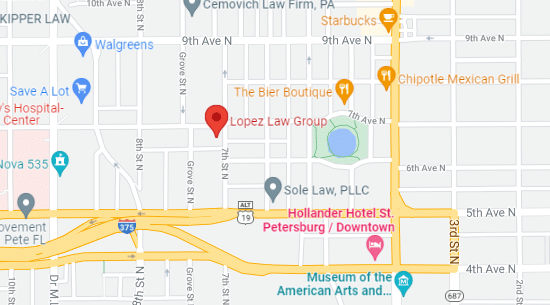
Lopez Law Group – Office
700 7th Ave N Suite A,
St. Petersburg, FL 33701
Ph: (866) 256-2356
Practice Areas
What Our Clients Say

A Godsend
Mr. Lopez was a Godsend and really helped me with my situation. Him and the entire firm were very diligent and helped speed the early stages of the process along due to a pressing situation. Throughout my experience working with the firm, they were always responsive and available any time I had a question or wanted to check on the state of affairs. Hopefully I won’t have to recommend Lopez Law Group to my friends or family, but if those unfortunate circumstances arise then there’s only one name I would trust. Thank you again for all your help!
Lopez Law Group Can See You Through Cases Like:




Don't See What You Need?
AS SEEN ON:





Lopez Law Group
700 7th Ave N, Suite A,
St. Petersburg, FL 33701
P: 727-933-0015
Business Hours
Mo, Tu, We, Th, Fr
Schedule a Call Back
Book a Consultation